“There was nowhere to go but everywhere, so just keep on rolling under the stars.”
-Jack Kerouac,On The Road
-
Featured
The Green Bridge
I looked up from the deep gorge I was standing in to the top of the hills, clouds covered them. The rain was falling all around us. I could see waterfalls falling as if from the sky itself. The air smelled fresh and cool. I took a deep breath, sat down on a rock and whispered to myself
‘If this isn’t what heaven looks like? What else it could be?’
We started our journey from Shillong, the capital city of Meghalaya. The rain was a constant companion for us since we reached here. It was still the beginning of monsoon, so it wasn’t as frequent and heavy as it would be in another two weeks. Still if you are planning to visit Meghalaya or the abode of clouds, rain will be a constant factor and the place were we are going ‘Sohra’ which was the wettest place on the whole country. So we packed our things and rushed through the smooth rain soaked roads in an old Maruthi 800. The sun came out for a second and greeted us with the warmth for a second, but the the sky turned dark and it started raining again.
Shillong is known as the Scotland of the east. It was a very popular destination for the British when they were ruling India. They adored the climate since most of India gets very hot in the summer and Shillong became the refuge for the British. Influence of their culture still resonates in an around the city. Even though Meghalaya had many wonders worth exploring, we were planning to go to the ‘Living Root Bridges’ of the Nongriat village in the Sohra district.
So deciding against exploring the city further we sped through the clouds of mist and lush green hills to our destination. Since the location of the brides is remote, the only way to them was by foot. We parked our car in a designated lot on the hills and started finding our way down the hills. Because of the regular increase in tourism, there was concrete paved path to the bottom of the hills which included some 3000 steps. Even though we weren’t experienced trekkers, this didn’t stop us even a little bit. We started climbing down that hill in our inexpensive sandals one step at a time .
Even though we were finding it hard to climb down, that appeared to be a piece of cake effort for the people living there. We saw many of the climbing up and down with firewood, gas cylinders, fresh cut grass and even daily groceries. The path wind down and in the corners gave us amazing view of the nearby surroundings. The air was cool and misty and everything around us was shining with greenery.
Eventually we made it to the bottom of the hill, and we reached a hanging bridge with just four iron ropes to walk through. The river was rushing underneath, lashing against the rocks in the shore. The water was muddy and it was tumbling hard downhill. We slowly made our way across catching our breath. It was a relief to step of that bridge and on the other side we were greeted by a board saying “welcome to Nongriat”. We were close.
.
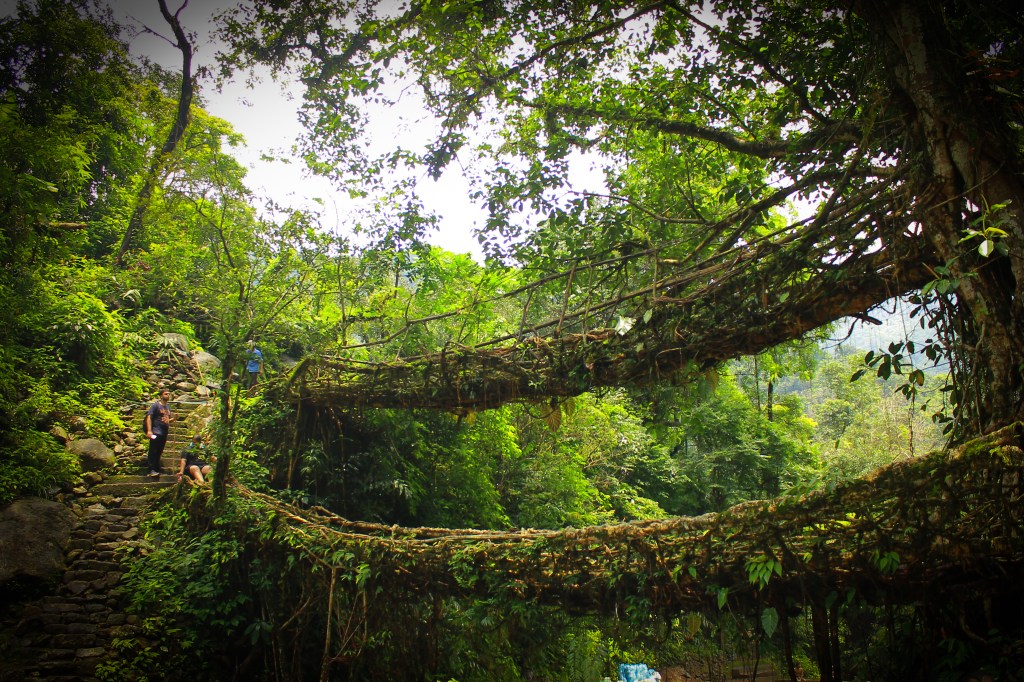
We walked excitedly through the village following the wet and narrow path to the bridge. We turned a corner and there it was!, the double decker living root bridge. It had two path ways to walk through. One on the top and another on the bottom. It was a wonderful sight, the roots intertwined with each other creating a bridge across the river. It felt sturdy walking on it and fresh, clear stream flowed underneath the bridge. I found a rock nearby and sat down staring at this wonderful blend between nature and man.
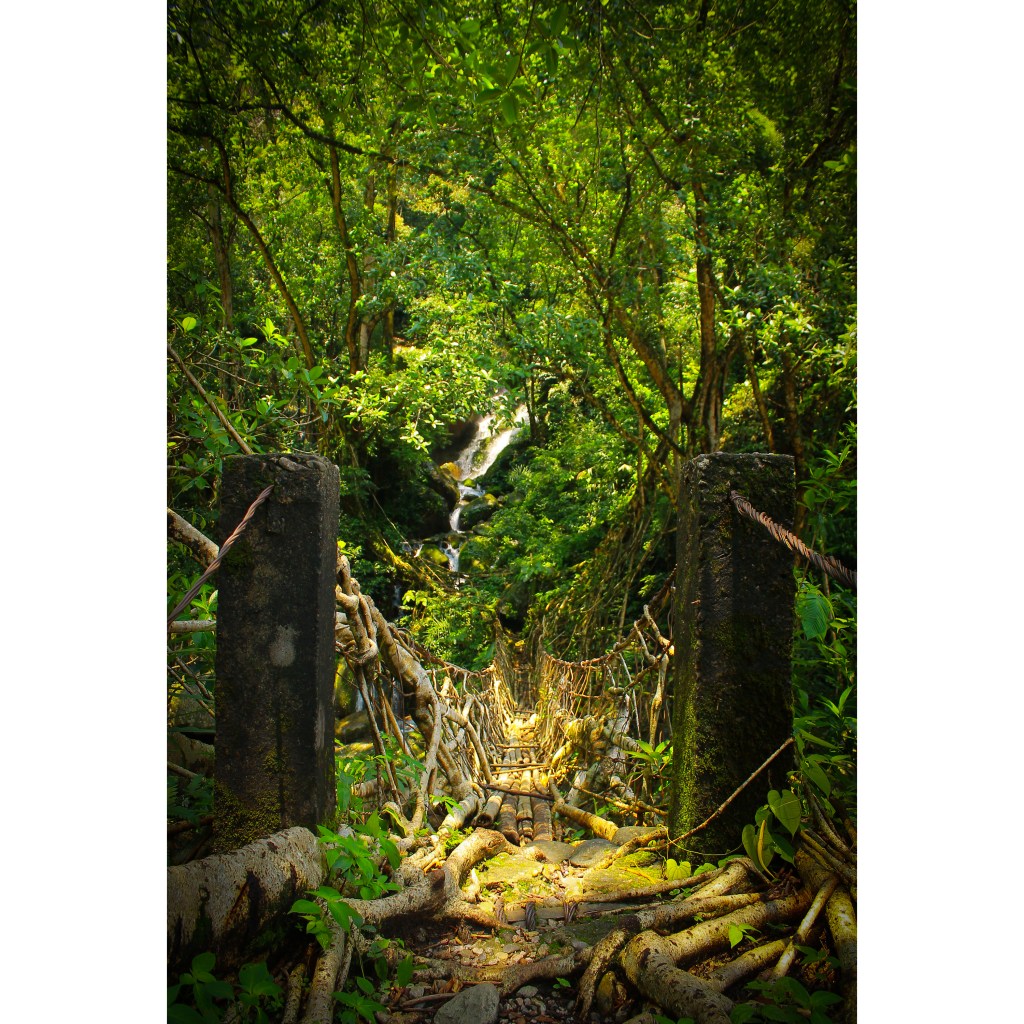
A living root bridge is formed by guiding the pliable roots of the Fig tree across a stream or river, and then allowing the roots to grow and strengthen over time until they can hold the weight of a human being. The young roots are sometimes tied or twisted together, and are often encouraged to combine with one another via the process of inoculation. As the Fig tree is well suited to anchoring itself to steep slopes and rocky surfaces, it is not difficult to encourage its roots to take hold on the opposite sides of river banks. As they are made from living, growing, organisms, the useful lifespan of any given living root bridge is variable. It is thought that, under ideal conditions, a root bridge can last for many hundreds of years. As long as the tree from which it is formed remains healthy, the bridge will naturally self-renew and self-strengthen as its component roots grow thicker. The villagers living around was building and maintaining these bridges for a hundred years.
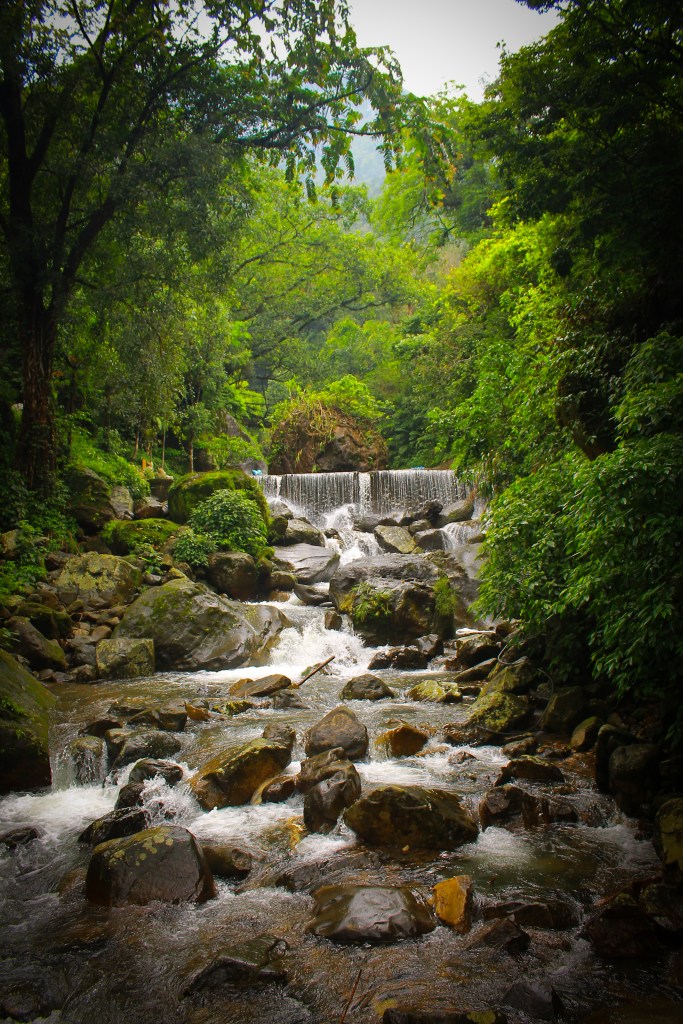
Our friend and guide Heimon told us if we trek more we can also visit an amazing waterfall a few kilometers away. So we continued our journey on ward. Soon the paved road gave away to a muddy pathway and we waded into the jungle. Waterfalls were all around us and the place was filled with pristine streams. It was raining now and then and the air felt so fresh. The water was falling all over the carved steps which was guiding up to the rainbow falls. We pushed through and ended up in the banks of the river where a magnificent waterfall was waiting for us.
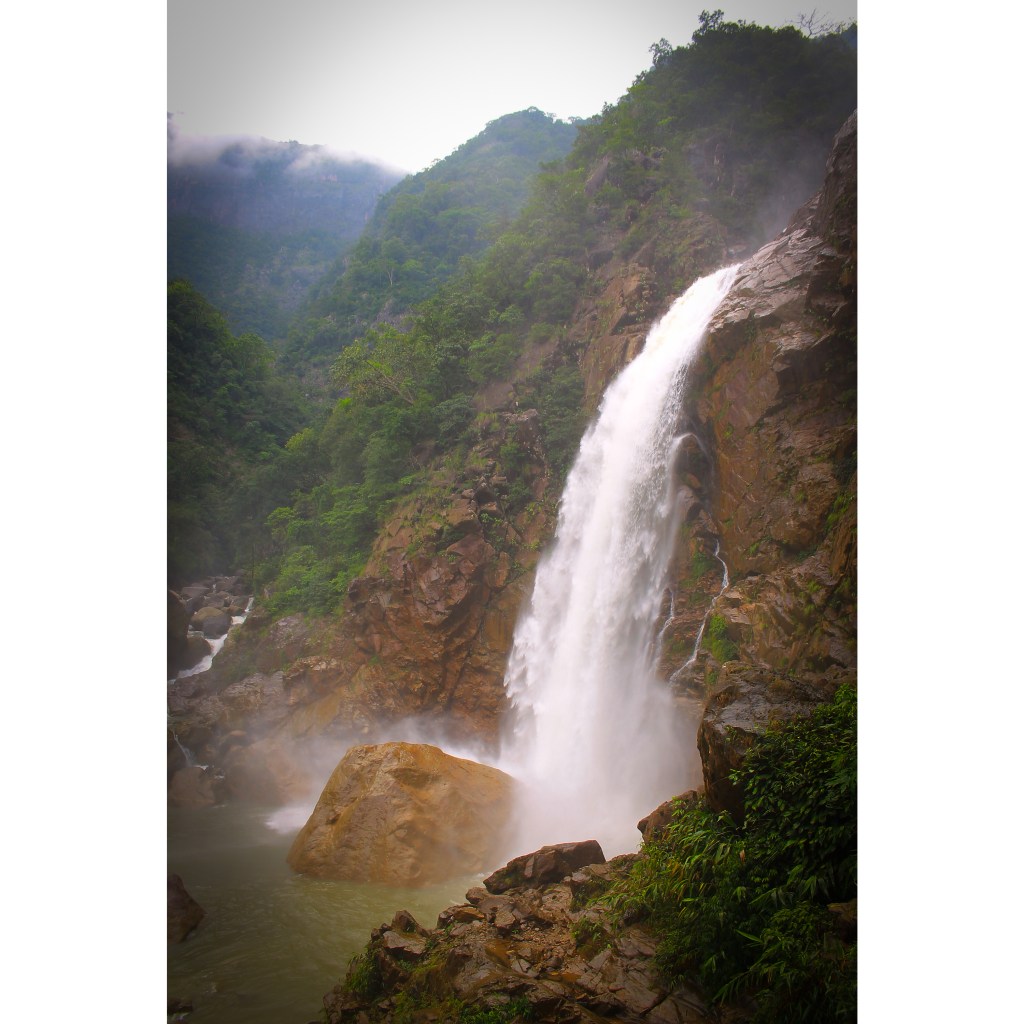
The waterfall was so strong, only the mist coming from it was enough for us take a shower. We sat on rock without our shirts and started to enjoy the beauty of it all. Small rainbows flashed all around us, and the sun was shining bright far above. We couldn’t have asked for more.
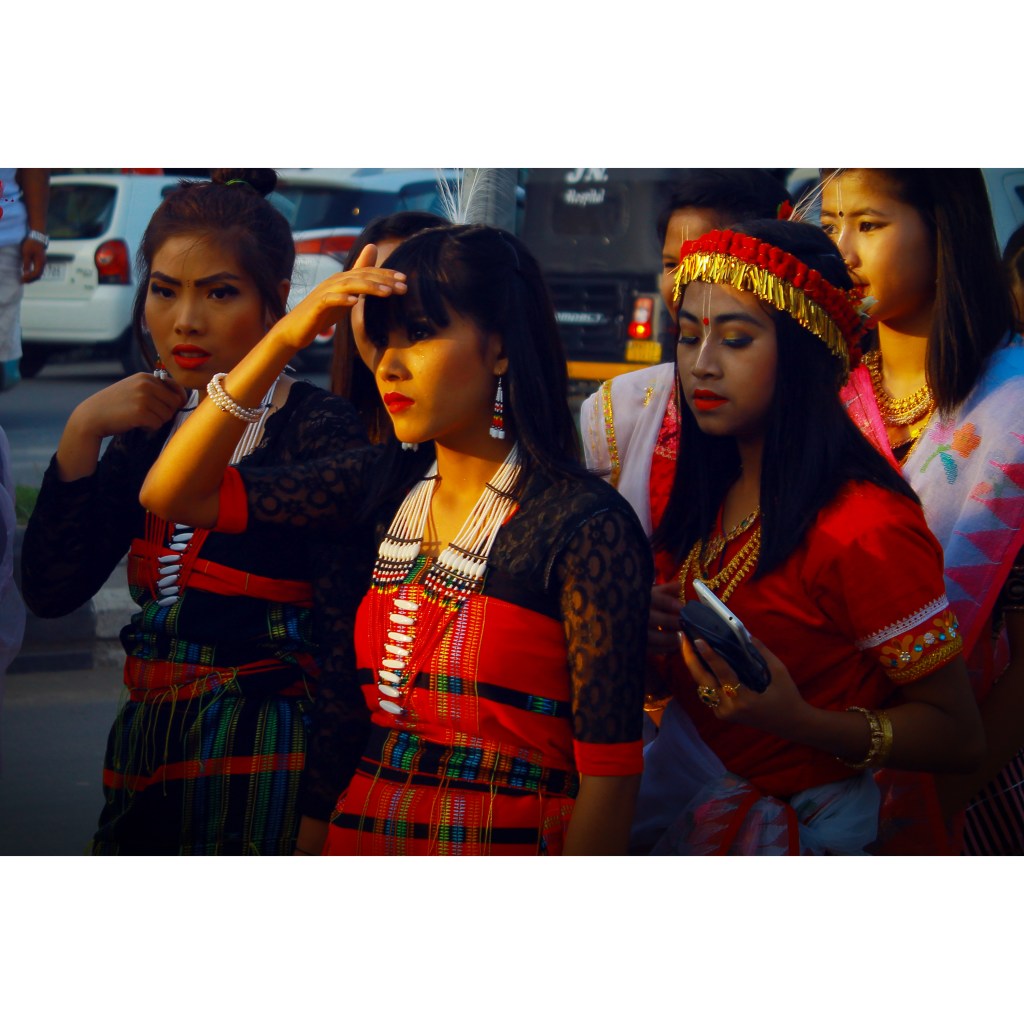
Familiar, yet Not.
I was really looking forward to Manipur for it had become a place that almost felt like home for me without even had to set foot there. Many of my best friends were from there and through their stories and devouring the amazing food that they made, I was in love with the place already. So it was with great excitement I jerked awake in my seat and looked around. It was still dark and the bus had stopped moving. I made my up to the front of the bus check what was going on and to my dismay saw our bus had caught in a giant traffic block in a windy road near a steep hill. I got down from the bus, the cold morning hit me quick, I hugged myself and made my way towards the front of the bus to check what’s happening. Nothing was clear at first and I stopped a man to ask what’s going on, he just pointed his hand towards something, I looked ahead and saw a huge boulder had dropped in the middle of the road dropping half of the road into the ravine next to it and more alarmingly in was only 500 meters from where our bus was parked.
I was annoyed and relived, I was impatient to get there and sit around with my friends, talking about things, reminiscing. After a while, an army truck appeared and started clearing away the debris and we were able to move again. We lumbered forward towards a small hillside and started upward through windy roads. Huge ravines and valleys rose beside us. The air was cool and crisp and I enjoyed every minute of it. After a while the bus crossed Manipur border. After passing through Mavo, a Manipur town bordering Nagaland, we slowed to a stop near some shops for breakfast.
I walked through familiar smells again, ah it has been too long since I smelled food this familiar and delicious. I and my two friends found our seats near a balcony facing the valley. The restaurant was built on a wooden platform near the road and it had an excellent view. The waiter hurried over to us and unable to contain my anticipation I asked
‘Bhayya, do you have iromba?”
He nodded. I smiled.
“What about aloo kanghaw?”
“Yeah, we have those too”
“Excellent!”
My face split into a broad grin and my friends looked at me and at each other.
“Don’t order any weird stuff” said Dilji.
“Nah, this food is going to change your life”
Food arrived after a short while and I started savouring the familiar tastes and scents. It was good.
I had a satisfied expression on my face when we stepped into the bus. We found our seats as the bus lurched forward to Manipur.
The first thing that strike me the amount of army men and armed police in the streets. Even a small village or a small intersection had those patrolling holding machine guns. Manipur has a collection of insurgent groups and Naxalite organisations each striving for different goals. To quell this the government had evoked one of the most draconian laws, AFSPA. The fight against AFSPA was still going on propelled by allegations that the Army was breaching the civil rights of a huge population.
I wondered when I saw this whether people of my home state take it in stride when the Army was patrolling every street in your place. The topography of the place filled with hills near the borders of the base and in bottom lies the Imphal Valley, stretched across a large swath of land which holds the state capital, Imphal. The place was lush and open in the countryside, large open fileds and small swatches of forests in between. Imphal valley holds the majority population of one of the main tribes in the state, the Maithais.
My friends got us and took us to his house in the Imphal west sector of the city. His was a one story concrete house which had small pond in front of it. Apparently most of the houses in the area had their own pond. There also was small shrine next to the pond and it glowed from the lights of a bunch of earthen lamps. We settled inside and looked forward to a few days of exploring.
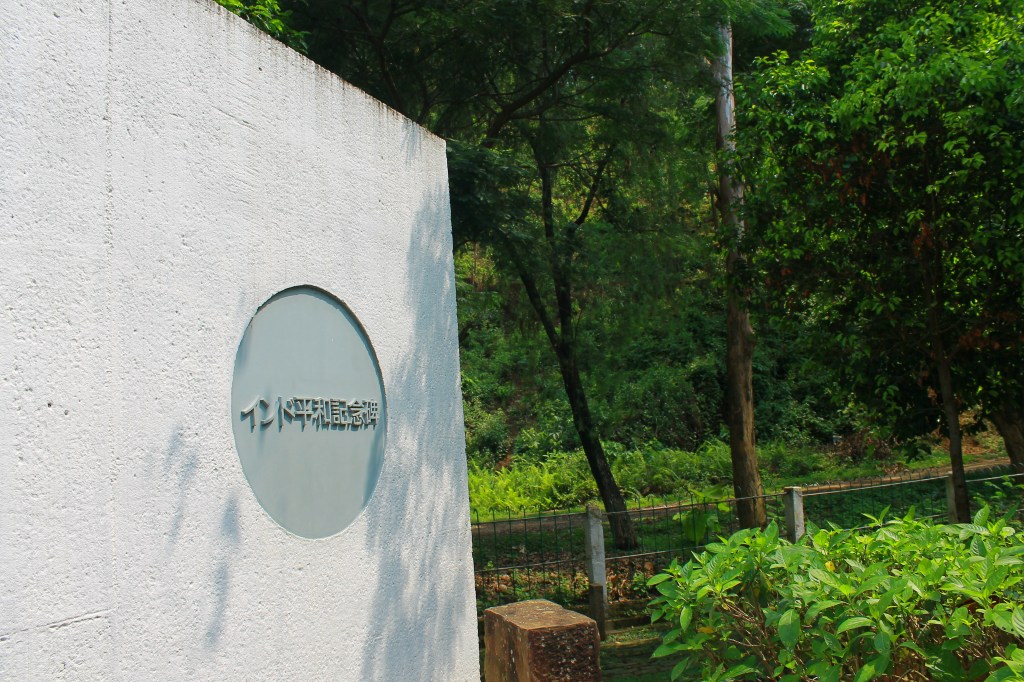
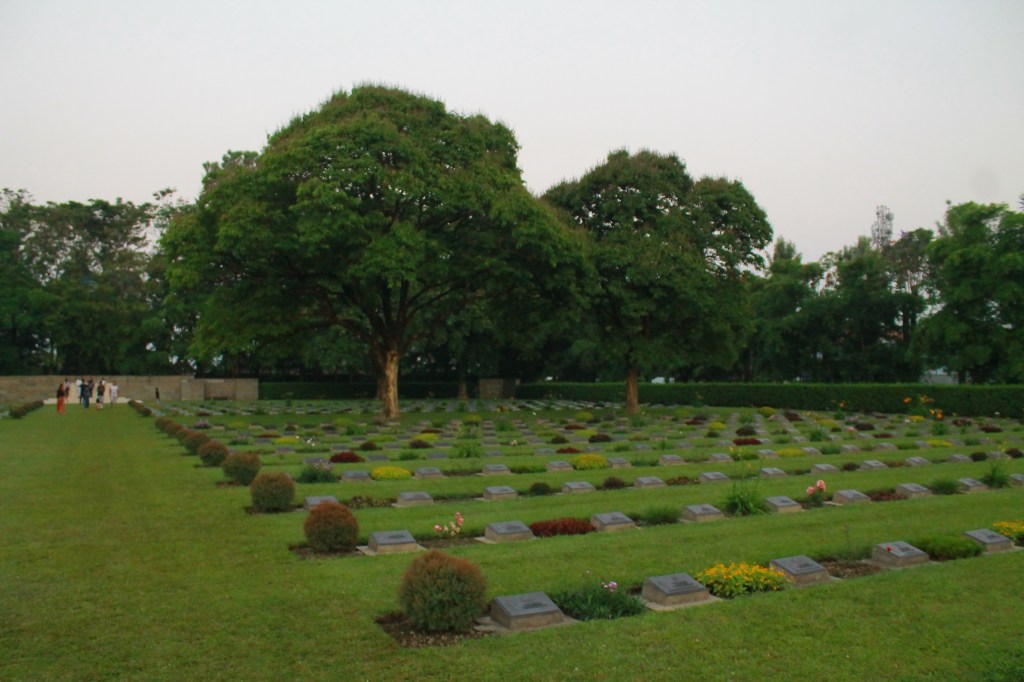
Manipur is a part of a piece of history that most of the rest of India wasn’t a part of. The World War II. Manipur is a one of the few places in the country that saw real fighting. This evident from sights such as War Memorials and Cemeteries dedicated to the fallen. When I was browsing through the stone headstones, I could see soldiers from Scotland, Wales and England died here in the fight. The stories of people fleeing the Japanese are etched in the local folklore. There also a war memorial commemorating the fallen Japanese soldiers here. It was a joint effort by both the countries to strengthen their ties in a post-world war world. Huge stones engraved in kanji script stood side to side to a black granite block in a garden. Apparently just days before a Japanese delegation along with living relatives of Japanese people who had died here.
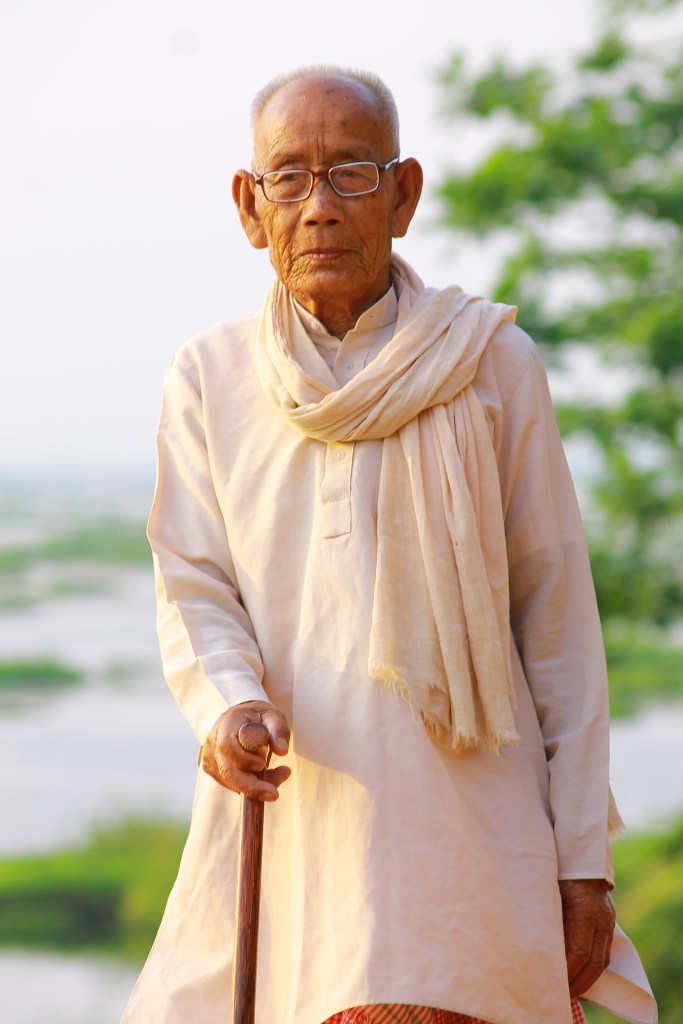
The strong presence of military and Para Military forces haven’t wavered much when we ventured into the countryside next day. We wanted to visit the famous LokTak Lake in Moirang. We sped through the countryside in an assortment of motorbikes and scooters. The countryside was green and beautiful. It was open and we could see magnificent hills in a distance in the borders of the Imphal Valley. Women all dressed up managing a variety of stalls in the roadside. Small streams and rivers dotted the place. After a quick lunch from a small restaurant we rode towards the lake. Soon a view of big lake dotted with small pieces of land all over it appeared before us. We stopped and started enjoying the beauty of it. My friends dragged us from there to a small hill where a small temple stood near the hilltop. We raced our bikes to the top and stopped before a breath taking view, the lake stood before us , and we couldn’t see it end, small islands with fishermen’s huts dotted all over the islands. Apparently the islands move on the water and they just keep drifting through the entire lake. So the view in front of us could completely change in a span of one or two days.
When we head back my friends took us to a small shack and asked if we wanted to try a local delicacy. It was dog meant. None of us have ever tried it, so we ordered a plate. We three couldn’t bring us try some of it and it was evident in our faces and my Manipuri friends started snickering at that. When the dish arrived steamy and a peppery smell rising from it, I and Dilji braved to try a couple of pieces. It was hard and rubbery, not what I would look for, nonetheless we swallowed down a couple of pieces for our ego and to please our hosts.
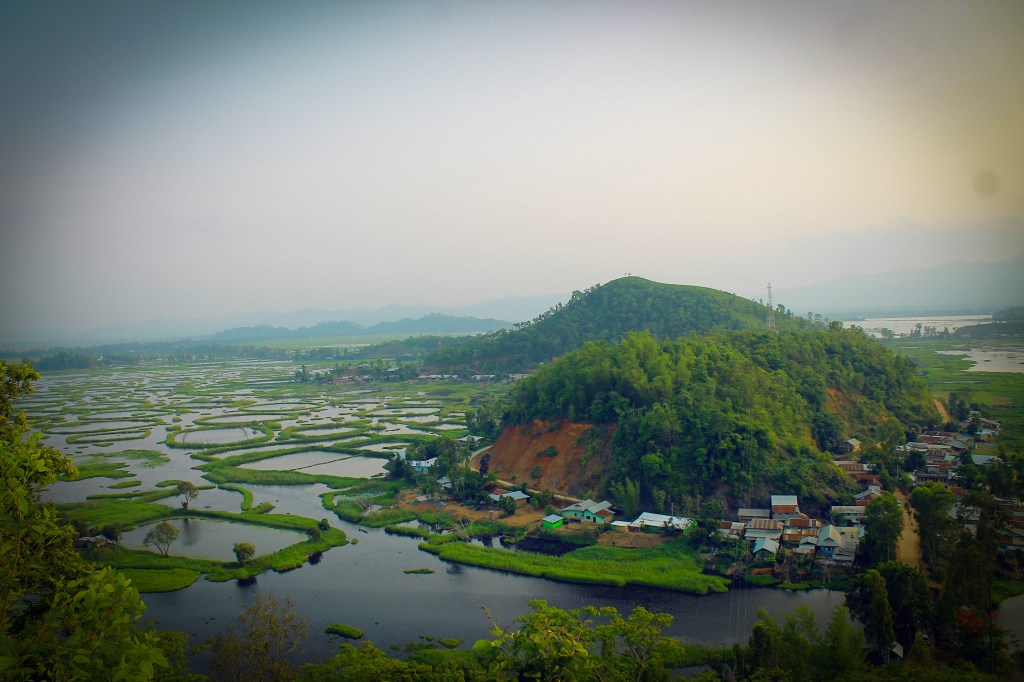
Manipur was a place of things that are familiar but new. The people were always wonderful and friendly and the land was lush and green. I wished I could stay there for a couple of days maybe go visit the Myanmar border, but we had more places to go. So we said our goodbyes and grabbed another bus to Guwahati.
Moonlight and White Sands
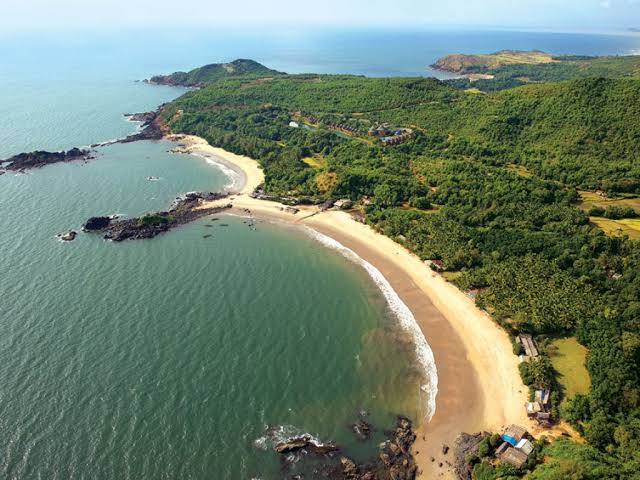
The moonlight spilled over the white sandy length of Om Beach. The light reflected on the water which made a glow in the horizon. The wind was a gentle breeze flowing between us, rustling leaves and heading east. We walked through the moonlit beach, and I felt a sense of euphoria coming on. The beach was empty and we trudged on in the sand. We sat down in open side in the beach facing the moon and waves. Moonlight seems to wash over us along with the wind. We sat down, silent, just looking ahead at the moon. Suddenly Marine’s melodious voice sang a French song. I didn’t know what it meant, but it seemed to melt with my thoughts. We sat there taking it all in and everything all right.
Gokarna is a small coastal town in the northern Karnataka along the Konkan coast. The town has its roots heavily entrenched in the Hindu mythology and it’s where the famous Mahabaleshwar temple located. Myths surrounds this place, this is from where Parasuram, one of the avatars of Vishnu, threw his axe above the sea and created Kerala. This is also where Vishnu with Ganesh , tricked the demon king Ravana into setting a shivalinga into the ground which would’ve given him enormous power if he were to have it. The Mahabaleshwar temple temple holds this ‘Atmalinga’ which was supposedly gone erect into the ground after he set it down. The temples started attracting pilgrims and made the town famous. But in the 1960s a different kind of travellers came to Gokarna for its idyllic beaches and they spread its name all over the world. They were hippies.
When we reached Gokarna, the sun has already risen. I could see the silence and beauty of the sourrounding villages while our bus was navigating through those narrow roads. The place seemed quaint and laidback. Even the town was not that crowded even though it was a major pilgrim centre. We came for the beaches. So we didn’t stick around in the town much and grabbed a couple of Rikshaws to take us to the beaches. Five of us piled into the Rikshaw and it went through a small and silent village. Small bushes dotted the land. We could see groves of cashew trees along the way. The auto started a small straight road up a hill and the sea rose on our side. It was beautiful, the breeze lifted our hairs and spirits as we took in that magnificent sight. We could see white sandy beaches dotting on the coast line.
My friend Romeo had never seen the sea before, so when we reached on top of the steps which leads to the beach, he stood there for a while and took in the sight.
“This is magnificent, better than I imagined”
He said aloud not particularly to anyone. I grabbed his shoulders and drew his towards the steps breaking his reverie. Small shacks with restaurants and rooms dotted the beach, and few people were around. We looked for a good place and took some rooms in a small hotel near the beach. The hotel had an open deck from where you can enjoy the sea and sit in the shade. We ate some good food and ventured into the beach.
The beach was not crowded but there were people around. We found a shade to spread our towels and keep our things and ventured into the sea. The water was cool and the sea was blue. The beach slowly sloped into the sea, so it wasn’t that deep near the shore. We played around in the water, rising and falling with the waves with a smile on everyone’s faces. I climbed out of the water dried myself and lay down in the towel under the shade and closed my eyes.
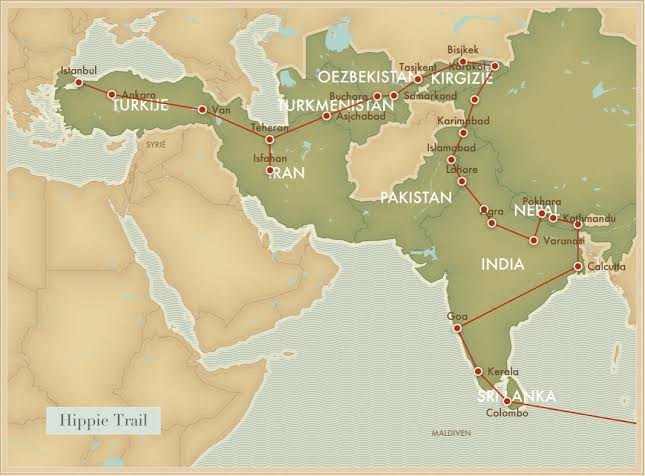
You can still see the influence of hippie culture in Gokarna, backpackers from different corners of the world still visited the place. The rooms to stay in was cheap and the food was varied and good across different shacks. To appease the huge number of foreigner’s different styles of food were available in the shacks and by evening people hung around a small fire singing songs and playing instruments. Gokarna is one of the destinations in the famous hippie trial in India. In the 60s influenced by the counterculture, travellers started from London, Berlin, Paris or Amsterdam crossing countries through Turkey, Iran, Afghanistan and Pakistan to reach India. The often hitchhiked or travel in beaten up vans and buses through countries to reach here. In the initial wave, Goa became a favoured destination for them and when Goa began to feel crowded, the sought new destinations and found Gokarna. Other major destinations for hippie travellers in the country was Rishikesh, Varanasi, Kovalam, Hampi and Puri. The often travelled beyond India to Nepal or to Thailand where Bali is one the end points of the Hippie trail.
The next morning a few us ventured out for a hike to the other beaches in the area. There are five main beaches in Gokarana. Gokarna Beach, Om Beach, Kudle Beach, Half- Moon Beach and Paradise Beach. In them four beaches are clustered together to the south-west side of the coast. Kudle and Om beaches have easy road access but to reach the other beaches you have to hike a bit. We set out in the morning carrying our processions in a small bag finding small pathway in the end point of Om Beach up a small hill. We climbed up the hill and came to small cliff edge where a small path lead our way, the cliff dropped sharply to one of our side and the sea was breaking against the rocks below .We followed the path verily and it soon deviated and went into small thicket of trees and shrubs. The path wound its way and eventually reached half-moon beach.
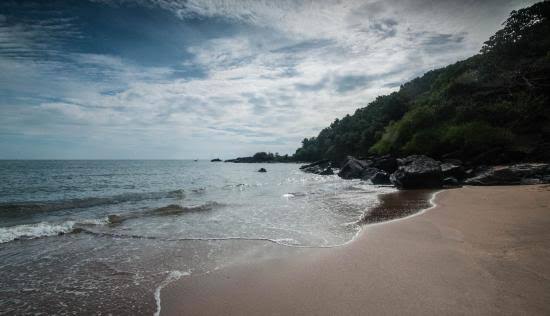
Like its name half-moon beach was curved small beach with two end points covered in rocks. There was absolutely no was there in the beach. The sand was coarser and grainy. We stood around and continues our hike to Paradise Beach. But eventually we lost our way and had to climb through some rocks jutting out to the sea. One my friend tripped and gashed her knee. We couldn’t move on further so we turned back and settled in a small shallow cove near the beach. The shallow water was slowly bobbing me up and down when lay in the cove. It was slowly rocking me back and forth and slowly dragging me into its rhythms. I lay there taking in the sky and the water feeling content.
With time the hippie trail slowly started to fade away. The border crossing between India and Pakistan become impossible to cross through. Travelling through Iran and Afghanistan became difficult a few years later because of the wars and Political unrest. Slowly the counterculture unraveled but its remnants and Influences are still around. Still living in places like Gokarna.
The Intoxicant
We got down from our bus in unknown part of Manipur. I had instructions to wait here for my friends. We stood out easily, with our large backpacks and the weary look of travel. People in the bus stared at us interested in what we are doing next. At a distance, a white Royal Enfield appeared as it drew near, my face split into an enormous grin. Followed by the Enfield, three more motorbikes and small truck appeared. My friends were here. After hugs and introductions all around, they put our luggage on the truck and rushed us to the nearest Yu Shop.
Yu is a traditional fermented rice liquor that is popular all across Manipur, I have heard many things from my friends about it and I was interested to try it for the first time. My friends lead us to a rickety restaurant and Romeo started talking with the shopkeeper. He turned towards us with a smile on his face.
“she says she still has some left and its off good quality. Shall we try some?”
I smiled at his enthusiasm and my curiosity couldn’t keep me waiting.
“Sure, why not”
I nodded as my looked to my travelling companions for any sign of objection. We sat around a wodden table and started remiscing about our time where I met all my friends from Manipur. The shop keeper arrived with a plastic bottle filled with a clear liquid and some empty glasses.Romeo passed a portion to everyone and we toasted for our reunion and we gulped it down.
A searing heat passed down through my throat into my stomach. I shivered and put my glass down. I looked up and saw Romeo grinning at me.
“How’s It?”
“Damn!”
I replied as I was trying to stop my coughs. A slow numbing feeling started to envelop me and I looked at him and nodded.
“yeah, its hits”
He looked at me and laughed.
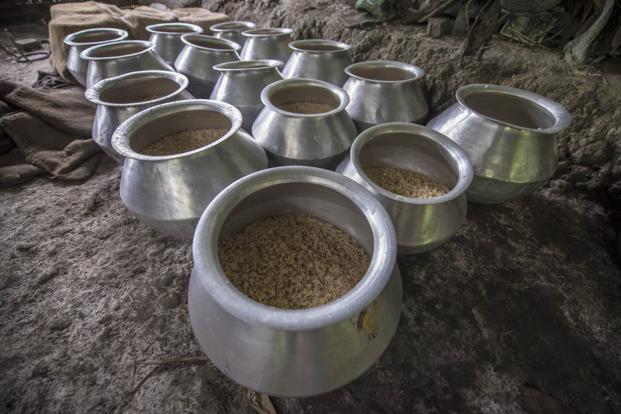
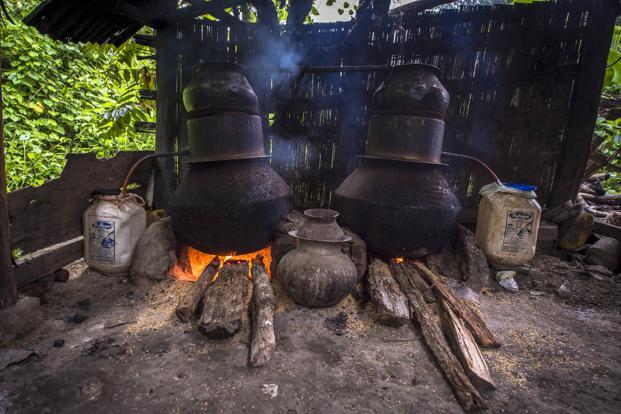
Yu is readily available everywhere as I could see while I was in Manipur. There are always shacks and small restaurants everywhere that sells it. Custom dictates that a Maithai , the tribe dominates the Imphal valley should never brew or sell Yu. So members of other tribes brew and sell Yu in their establishments. There are two key ingredients to the drink: flattened, dry disks called hamei, which are made up of a chopped and powdered wild creeper known as yangli, and rice. The locals prefer unpolished rice for its superior nutritive quality, on which the liquor feeds on and blooms. The cooked rice is known as chakngan, which is then washed by pouring water over the basket and letting the water drip-dry through the sieve. The more traditional method calls for spreading the rice thin on a mattress instead and letting it cool and dry—a longer and tedious method. Washing helps wash away the starch and allows quicker fermentation and the impatient brewers rather adapt to this new method. Hamei is then crushed into the rice and the mixture is transferred into a basket lined with the leaves of a tree known as Flame of the Forest. Under the warmth of the dark leafy blanket, the brew is left to ferment for four to five days during summer, and a little longer during the cold winters in the hills. It is then distilled in a yukok. The first few litres, known as yu machine, is top-drawer stuff and the liquid gold fetches the brewers a few hundreds rupees for a liter.
On one of our evenings in Imphal, Romeo took us to a small shack where he used to frequent for drinking Yu. It was small shed attached to a house where the shed was covered in blue and black tarpaulin. The place was filled with the smell of stale alcohol and fried pork. Since there was no place to sit , we were ushered inside the house and to my astonishment, directed to a bedroom. A maid suddenly spread some old newspapers in the floor and direct us to sit. Soon a plastic bottle filled with Yu came with some additions of fried pork and spiced pea nuts. Romeo chatted with the owner of the shack like they were old friends and soon after he left us by ourselves. Soon conversation flowed in the room aided by the alcohol, everyone was laughing and trying talk over each other. Our discussions varied from old memories to the politics of Manipur. When I left the place people were still enjoying you save for an occasional man in front of a beer bottle.
Traditional rice alcoholic beverages are entrenched with the culture of North East, other states in the region also have their varieties of rice alcohols. Even though alcohol is regulated in the country by the government, as far as I could see the market surrounding Yu doesn’t have all the regulatory hurdles with it and thus its explains the change of prices and unlicensed shops that sell it.
The road less traveled
We reached an unfamiliar point .There we saw a sign reading ‘Dhimbam Ghat section begins’.
“Is there a ghat road here?” Rishad asked me.
“I have no clue” I replied.
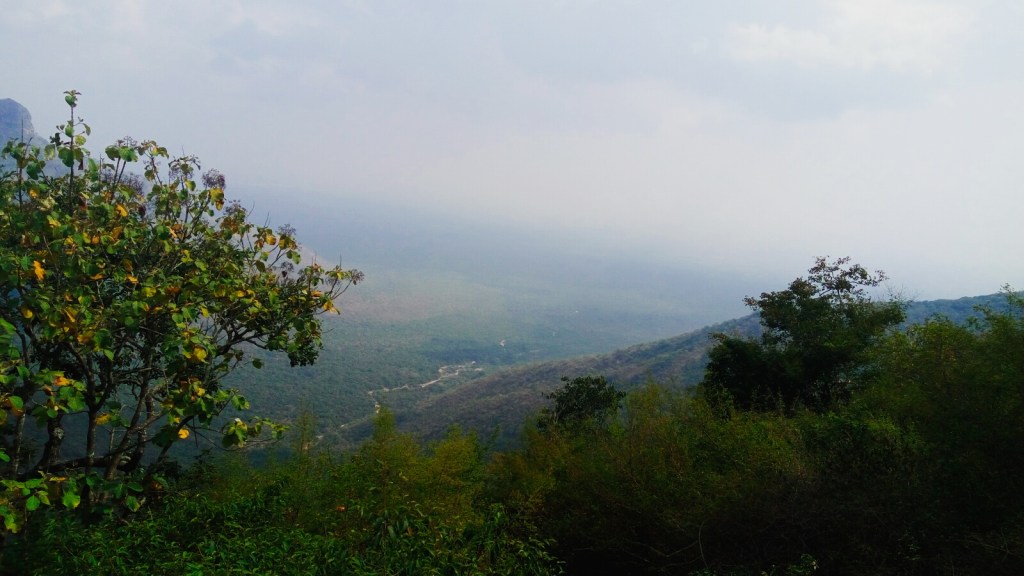
We rode ahead and before us was huge hill with 27 narrow hairpin bends. One false move then me, him and our bullet will end up the valley. We rode carefully, slowly overtaking the Huge trucks and when we reached the top a little mist surround us. When it slowly cleared, a breath taking view appeared before us. Green hills appeared before and down below a river snaking its way to somewhere.
“This was good Idea” Rishad said.
I nodded.
Going for a long ride has always been in my bucket list. But since I don’t know how to ride a motorcycle, and most my friends didn’t own a Bike which has the capacity to go long distances this idea has remined as a pipe dream. But then I met Rishad, my fellow classmate and a ardent travel lover. So one day when he told me he’s going to his home from Pondicherry, I suggested him why can’t we take ‘the road not taken’ to our home. Rishad was more than enthused about the idea, so one day filled his Royal Enfield Bullet with petrol and head to my home which is almost 700km away.
We followed the original path to my home till Salem, travelling through National Highway 45 and 79. It was a little cold in the highway and the morning sun was rising behind us. That sight was really magical. We passed Salem in 4 hours into our journey. When we reach Bhavani, we took a detour and followed the road to Sathyamangalam and our goal was to cross over to Karnataka through that way.
Sathyamangalm forest was once known for its notoriety of harboring the infamous dacoit “Veerappan”. The road to Sathyamangalam was surprisingly maintained well, either side was covered in greenery and hills were visible in the edges. When we found the Ghat Road section even though we were a little surprised the expertise of Rishad had managed us to reach the top. We crossed Sathyamangalam and head to the border of Karnataka State.
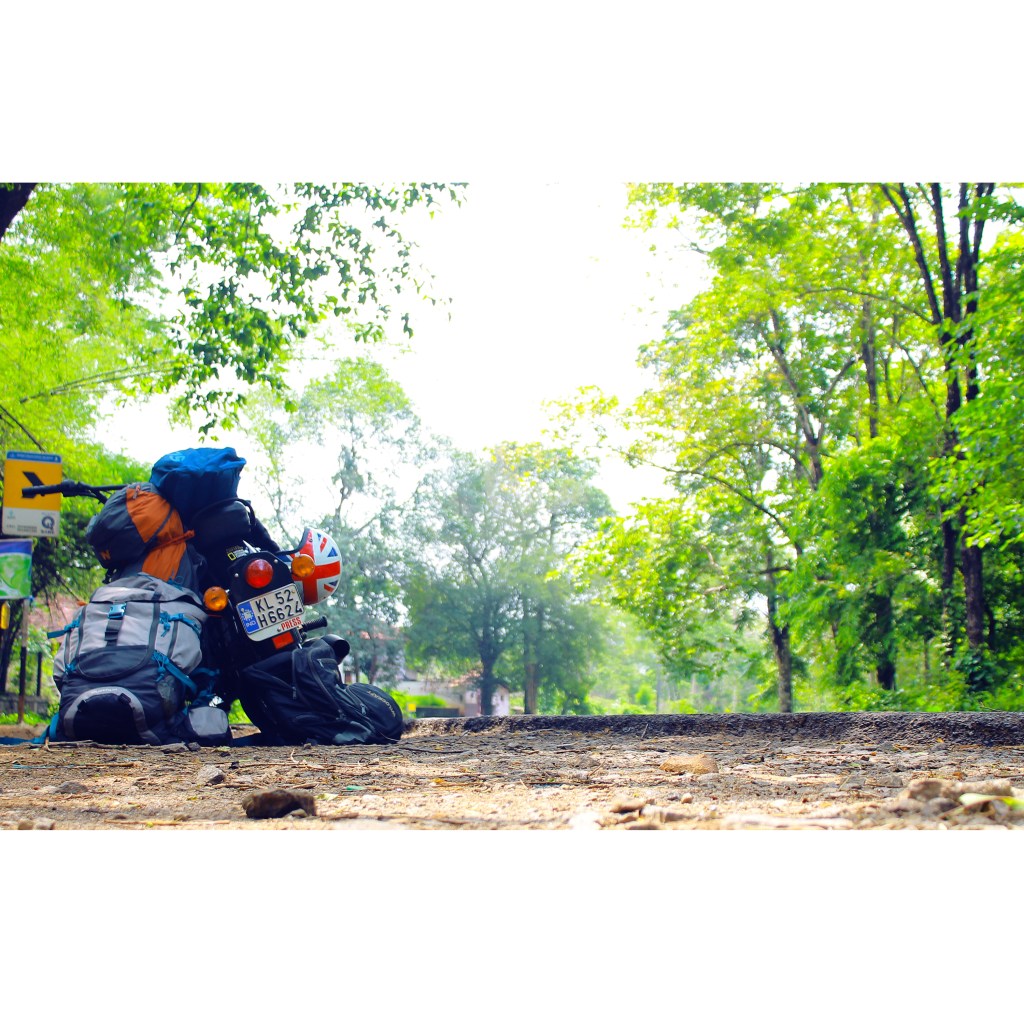
We crossed the bordering district of Karnataka, Chamarajanagar and Reached the famous Bandipur tiger reserve. Even though we couldn’t see any tigers the abundance of other wild animals like Deer, Elephants, Monkeys and Wild Boar made our journey through Bandipur worthwhile. We followed the road and entered Mudumalai, another tiger reserve in Tamil Nadu. The path lead us to Gudalur, a quiet town in Tamil Nadu filled with tea plantations and scenic beauty. From there it was quick ride of one hour and we were home.
We travelled 706km from Pondicherry. Crossed 4 states (Technically Pondicherry is a UT),3 tiger reserves on our way home. It took us 15 long hours to complete that distance. The journey was quite worth it even though it was followed by a severe back pain the next day. It was my first long ride and I enjoyed every bit of it. We I lay down in my bed that night, the sound of Bullet was echoing in my ears.
A world within a world
The morning light was coming down from the roof of Namdroling Monastery and was reflecting on the golden statue of Padmasambhava and glittering all over the temple as I stood there watching the majestic gold plated statues, in the background there was a lady singing a melodious Tibetan song adding a divinity to the atmosphere. I sat on the floor with Maya, my friend from USA and she told me “I am glad that we came here”, and I nodded my head in agreement. We sat together on the floor savouring the calm, quite atmosphere around us and I felt i am not in India anymore.
My first memory about Golden Temple was from my English Class in my 8th grade, it was a mentioning in a chapter related to Coorg. Since then I always wanted to come here and experience the beauty and soul of this place myself. So here I am after six years, completing my dream and striking off one of the many dream destinations in my diary. I came here with a group of American students from Princeton University as a part of their summer programme and I was lucky enough to accompany them to one of my dream destinations.
When we deviated from the Madikeri highway to Bylakkuppe or the little Tibet, the changes of entering into a complete different place was visible all over. Houses resembling a Jackie Chan movie, prayer flags flying around and the fertile land well utilised for cultivating various crops. Totally it was feeling of ‘we are not in India anymore’ and I was enjoying it and was totally excited about what I am
What caught my eye when we entered through the gates of the golden temple was the pagoda and the round disk which is adorned with small sculptures. The pagoda also sports a picture of the new Rimpoche, the head of the temple.
As we strolled through the temple I saw little monks were eyeing us and some of my group mates were waving at them and everybody started taking pictures of this magnificent structure. I stood there in pure awe thinking about the struggles of the Tibetan community and their success in coming up with such a beautiful temple in a foreign land. The result of their hard work has really paid off here.
Namdroling monastery is the largest teaching centre of Nyingam lineage of Tibetan Buddism in the world.The monastery was established by throne holder Kyabje Penor Rimpoche in 1963, following his exile from Tibet.The monastery’s full name is Thegchog Namdrol Shedrub Dargyeling and is called Namdroling for short. The initial construction of this monastery was from bamboo from nearby forest.
Later they added Buddhist College, A nunnery and another temple to the monastery. As of 2008, the lodging facilities alone for the school include three buildings over 150 rooms. The population fluctuates as monks complete or attend studies in the monastery. A recent census had the population in excess of 4000 monks and 800 nuns.
The first thing that anyone will notice about the golden temple is its sheer calmness. The walls were adorned with mural paintings and there are traditional drums displayed on each sides. There are not much restrictions, so that we can walk around and savour the beauty of the temple ourselves. I borrowed my friend Brittany’s camera and started taking pictures. She has agreed to teach me some photography and I am showing a keen interest in the whole temple seemed photogenic and it gave me a good opportunity to capture some beautiful moments from the temple.
After visiting the main temple we moved on the small shrines which were built alongside of the temple. The architecture was the same but the idols in them were different. There was also a model of another Tibetan monastery in Tibet on which the golden temple was made from. After a quick look at everything we moved outside and my friends were all crowded in front of souvenir shops to gather something to remind themselves about this place
‘Momos’ are one other major attraction in Bylakkuppe.It is a Tibetan dumpling made from either meat or vegetables covered with a shell like covering made from maida. Everybody wanted to try this new ‘exotic’ food and we did from a restaurant across the street. As we finished our lunch with momos our little expedition to little Tibet, like all the good things have come to an end. When we are leaving from Bylakkuppe I told myself, ‘I am going to come again.
The Summit
There is big difference between mountain climbing and mountain hiking. Mountain climbers have training, experience, and equipment. They also know full well the risks they are taking. Mountain hiking is usually done by amateurs. I am more the hiking type myself. I remember walking to the top of the mountain peak in mount Koubru of Senapati district in Manipur. It was a long way up there. It took almost 14 hours to reach the mountain peak with all our equipment heavily loaded on our backs in the journey. It was one of the toughest work I ever did in my life, but it was worth it. The view was stunning, the weather was wonderful and the workout was exhilarating. Of course I was tired, but I didn’t care! I still consider that climb to be one of the most enjoyable days of my life.
One memory I carry from that exhilarating journey was I was never in fear despite of all the risk involved. The trails were not well groomed, there were thorny plants on either side of our trail sometimes, and there were areas which were steep enough to require stairs. It was one of the toughest thing to walk on those trails which were left deserted for months. In my opinion, if I stumbled and fell I may have received serious injuries. Despite all the hardships, we made it to the summit early in the morning.
Have you ever been to the top of a mountain where it seems like you can see forever? Have you ever been on the top of a mountain and seen its sweeping beauty? You stand there and slowly rotate for 360 degrees, and no matter which direction you look, you see pure beauty.
The moment I reach the summit, all those troubles, pains, and frustrations got vanished right at the moment when I saw the mesmerising beauty of nature, the place where the earth actually met the heaven. While I was lost in this mesmerising beauty, I came to my sense when my friend called me. Then we rested for a while and soon after that we started to spread our tents near the spot which we thought it would be convenient for our stay. We made our stay really interesting. We were divided into teams and we were assigned with different task. Some went for fetching water from the hillocks, some to fetch firewood and some stayed back to prepare our meal. Having completed with what we were assigned of, we made back to our camp as soon as possible. Then, we had a satisfying lunch all together sharing our experiences during our task and the journey. After we rested for a while when I woke up the view I saw was spectacular, the most amazing sunset I have ever seen in my life. The sunset was gold and pink and purple and glowing, and the light was constantly changing, making the sky prettier from one moment to the next.
That night was extraordinary for me, with the camp fire round the middle my friends played guitar and sang melodious songs the whole night. The sound of the soughing wind, groaning trees and squawking birds along with the melodies of my friend I was thrilled with joy. The smell of the wildflowers, earthy smell and the smell of the pine trees created the scene more intense and made me feel nostalgic.
Camping at a mountain top which is located 2000 -2500 meters above sea level is not so easy as it seems. We have covered the highest summit of mount koubru and we explored the whole mountain during our camping. It was a kind of life up there which was hard to predict but we have faced every obstacles that we met and made it one of our best camp ever. I have learnt many things from that camp, I realise the spirit of team work, the essence of friendship, the endless effort to achieve one’s goal, the real beauty of nature and so on.
During the camp, I also realize that we must have courage for the great sorrows of life and patience for the small ones. And when we have laboriously accomplished our daily task, we go to sleep in peace. As Mother Teresa says, “Yesterday is gone. Tomorrow has not yet come. We have only today. Let us begin”. Life was not the same when I returned back from the journey, I was a changed man, changed for the better. I came back from the camp not only conquering the mountain but also conquering myself.
 anywhere road